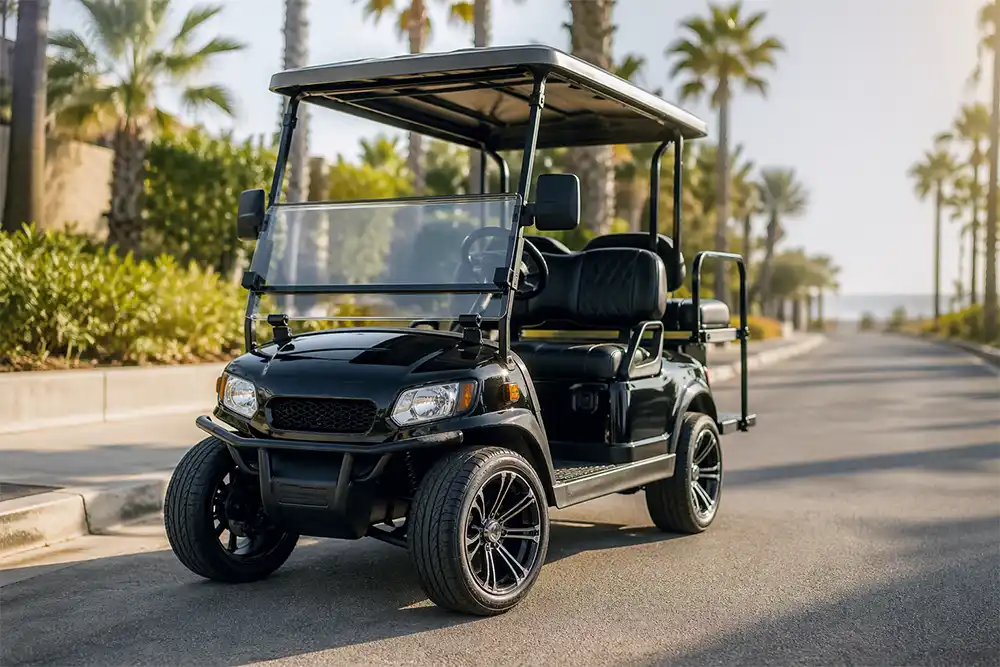
Turning a golf cart into a street legal vehicle in California is more than just adding a few lights and mirrors. It is a structured upgrade that brings your cart into compliance with Low Speed Vehicle standards, which determine whether it can be driven on public roads.
For many owners in California communities, especially in coastal towns and master planned neighborhoods, this upgrade is a practical way to extend the usefulness of a golf cart beyond private property. However, the total cost can vary widely depending on the starting condition of the cart, the quality of components used, and whether professional installation is required.
Before investing, it is important to understand what is actually required by law and what each part of the conversion really costs.
Street Legal Conversion Cost Summary
Making a golf cart street legal in California typically costs between about 800 and 2500 dollars depending on equipment quality, installation, and whether the cart needs performance upgrades. Required modifications include lighting, mirrors, windshield, seat belts, and sometimes speed adjustments. Additional DMV registration and inspection fees may apply. Labor costs increase the total but ensure compliance and safety for road use.
What It Means to Be Street Legal in California
In California, a standard golf cart is not automatically street legal. To operate on public roads, it must be converted into a Low Speed Vehicle, which meets federal safety standards and DMV requirements.
This classification allows the vehicle to be driven on roads with speed limits typically up to 35 miles per hour, but only after it has been properly equipped, inspected, and registered.
The difference between a basic golf cart and a street legal version is significant, especially when it comes to safety equipment and legal compliance.
Required Equipment and Conversion Costs
To qualify as street legal, a golf cart must meet specific equipment standards. These components are the foundation of the conversion cost.
Lighting systems including headlights, brake lights, and turn signals are usually the first requirement. Depending on quality, these kits typically range from budget friendly setups to more advanced integrated systems.
Mirrors, horns, and reflectors are also required for visibility and communication with other drivers. While these are relatively inexpensive individually, they are essential for compliance.
A DOT approved windshield is another key requirement. This is not just a cosmetic upgrade but a legal necessity for most street legal conversions.
Seat belts are required for all passenger positions, which often means additional mounting hardware and installation labor.
Some carts also require a speed adjustment to meet Low Speed Vehicle standards, which can add to the overall cost depending on the motor and controller setup.
Average Cost Breakdown in California
Most conversions fall into a general cost range depending on how complete the cart already is.
Basic street legal kits that include lights, horn, and wiring typically start in the lower price range. More complete setups that include higher quality components, wiring harnesses, and installation support fall into a mid range. Fully installed professional conversions with premium parts and compliance checks reach the higher end of the spectrum.
Labor costs in California can also increase the total price, especially in urban or coastal areas where service demand is higher.
In many cases, owners who already have partial upgrades such as lights or windshields will spend less overall.
DMV Registration and Legal Fees
Once the cart is fully equipped, it must be registered with the California Department of Motor Vehicles as a Low Speed Vehicle.
This process includes title transfer, inspection verification, and registration fees. Insurance is also required before the vehicle can legally be driven on public roads.
While these fees are not the largest part of the conversion cost, they are mandatory and should be factored into the total budget.
Installation Costs and Professional Conversion
Many owners choose professional installation to ensure compliance and avoid costly mistakes. Improper wiring or missing equipment can result in failed inspections or unsafe operation.
Professional installation typically includes wiring the full lighting system, mounting safety equipment, and verifying that the vehicle meets all required standards.
In California, this service can vary depending on the complexity of the cart and whether additional performance upgrades are needed.
While it adds to the upfront cost, it often saves time and ensures the cart is fully road ready.
Why California Conversions Can Cost More
California has strict regulations for Low Speed Vehicles, which can increase overall conversion costs compared to other states.
Coastal environments also play a role. Salt air can accelerate corrosion, meaning higher quality components are often recommended for durability.
In inland regions, heat can impact electrical systems, which sometimes leads owners to invest in upgraded wiring or sealed components.
These environmental factors often influence the type of parts selected, which affects the final cost.
Is It Cheaper to Buy a Street Legal Cart
In many cases, buying a fully built street legal golf cart can be more cost effective than converting one piece by piece. This is especially true if your existing cart requires multiple upgrades or performance adjustments.
Pre built street legal carts are already certified and registered for road use, which eliminates the guesswork and potential compliance issues.
However, conversion can still be a good option if you already own a newer cart or only need minor upgrades.
Common Cost Mistakes to Avoid
One of the biggest mistakes owners make is underestimating the total cost of compliance. Buying a basic light kit does not guarantee street legality.
Another common issue is choosing low quality components that fail inspection or wear out quickly. This can lead to additional repair or replacement costs later.
Skipping professional installation can also lead to wiring issues or failed DMV inspections, which ultimately increases total expense.
When a Conversion Makes Sense
A conversion is most cost effective when the cart is already in good mechanical condition and only needs equipment upgrades.
It is also ideal for owners who plan to use their cart frequently in communities where street access is allowed for Low Speed Vehicles.
In California, where golf carts are commonly used for short distance transportation, a properly converted cart can be a practical investment.
Cost to Make a Golf Cart Street Legal Conclusion
The cost to make a golf cart street legal in California depends on equipment, labor, and registration requirements. Most owners can expect a range between moderate and higher end pricing depending on how much work the cart needs.
While the upfront investment can vary, the result is a fully compliant vehicle that can legally operate on public roads in approved areas. Understanding the real requirements helps avoid unexpected costs and ensures a smoother conversion process.
FAQs
How much does it cost to make a golf cart street legal in California?
Most conversions range from about 800 to 2500 dollars depending on equipment quality installation and whether speed or electrical upgrades are needed.
What is required to make a golf cart street legal in California?
Required equipment includes headlights brake lights turn signals mirrors windshield seat belts horn and proper registration as a Low Speed Vehicle.
Is it cheaper to convert or buy a street legal cart?
Buying a pre built street legal golf cart can sometimes be more cost effective if multiple upgrades are needed for a conversion.
Do I need insurance for a cart in California?
Yes insurance is required for all Low Speed Vehicles registered for road use.
Can any golf cart be made street legal?
Not all carts qualify. The cart must meet speed and safety requirements to be registered as a Low Speed Vehicle.
How long does it take to make a golf cart street legal?
Depending on parts and installation it can take a few hours to a few days including DMV processing time.
What is the difference between a golf cart and a street legal golf cart?
A standard golf cart is limited to low speed private or restricted areas while a street legal version meets safety and registration requirements for public roads.