Golf Cart Rear Axle Problems: Noise, Leaks, and Fixes
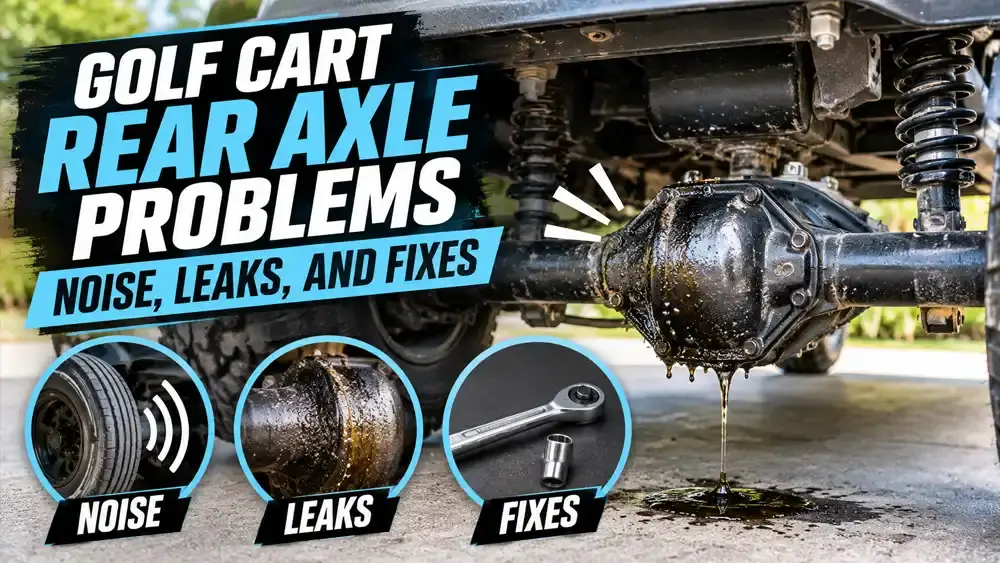
Article summary: Rear axle problems usually show up as three signs: noise (whine, grind, or clunk), leaks (gear oil near the axle or on a wheel), and play (a wheel…
Article summary: Most electric golf carts run lights, horn, turn signals, and USB ports on a 12-volt system fed by a voltage reducer, not directly from the 36V or 48V…
Article summary: Most golf cart steering problems come from four things: low or uneven tire pressure, worn tie rod ends, worn king pins or wheel bearings, and bad toe alignment.…
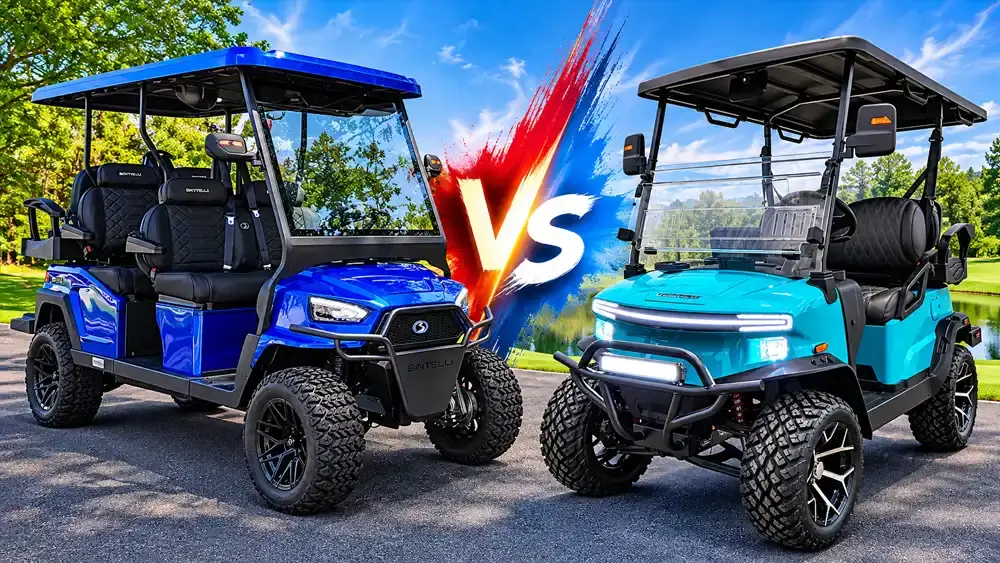
Article summary: Denago is the better value pick. It lists a lifted stance, 40+ mile claimed range, and CarPlay and rear camera as standard at a lower typical price. Bintelli…
Article summary: Bintelli golf carts are a good choice for buyers who want a polished, street-legal lithium cart with power steering and strong brand recognition. The Beyond is the entry…
Article summary: Denago golf carts are a good buy for shoppers who want a lifted, street-legal lithium cart with lots of standard features at a fair price. Models like the…
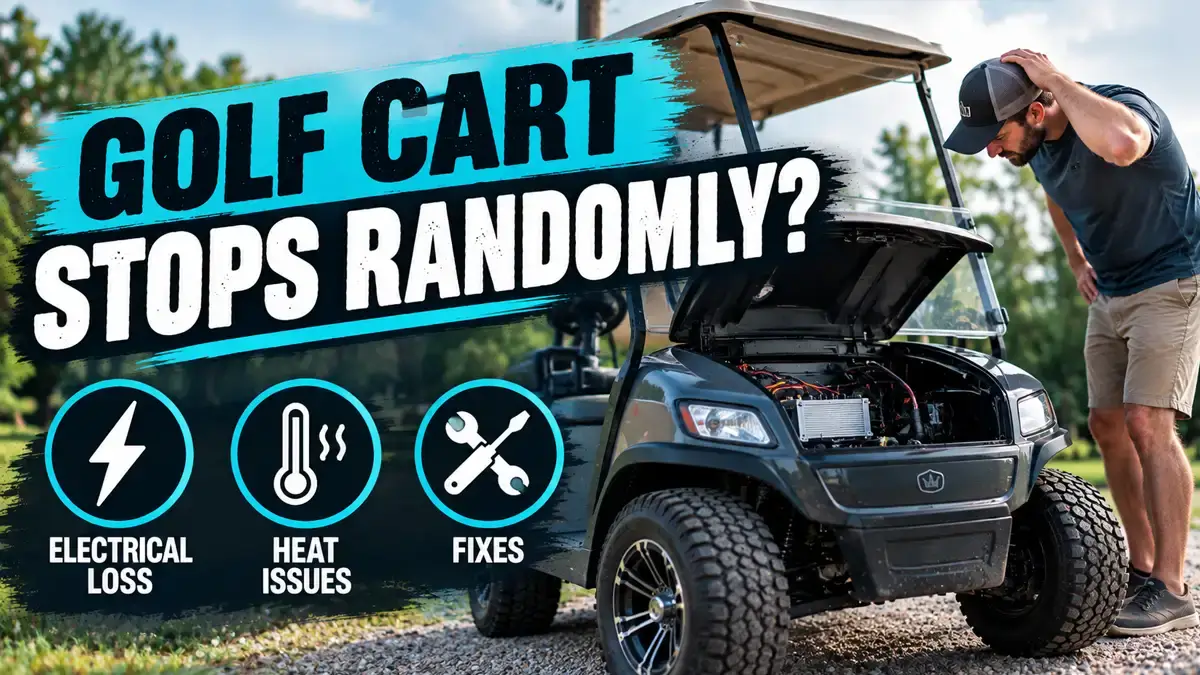
Summary: A golf cart that stops randomly usually has an electrical loss or a heat problem. Loose or corroded battery cables, weak batteries, a failing solenoid, a worn key switch,…
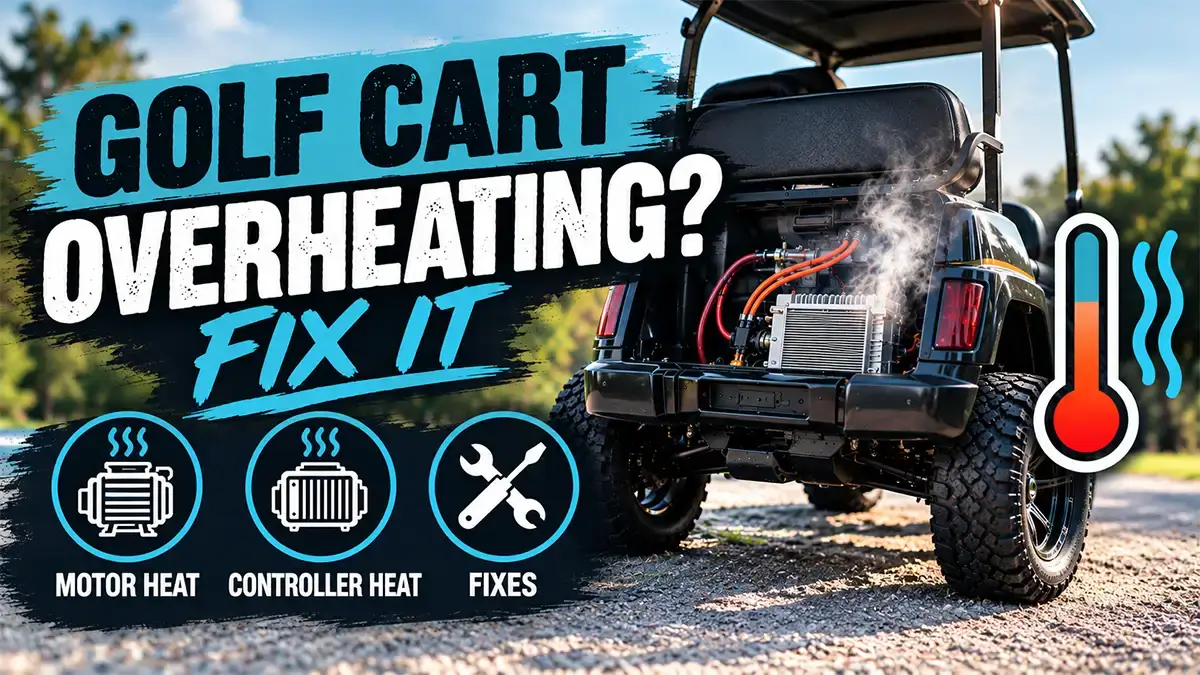
Summary: Golf cart overheating usually starts in one of two places: the motor or the controller. Motors run hot from heavy loads, steep hills, oversized tires, dragging brakes, weak batteries,…
Summary: A 3 wheeled golf cart, often sold as an electric trike, is lighter and more compact than a standard cart. It can suit solo riders and short trips. However,…
Summary: Golf cart mud tires use deep, wide-spaced tread to grip soft dirt, mud, and loose ground. They shine on trails, farms, and wet dirt. On pavement, they are louder…