The Short Answer
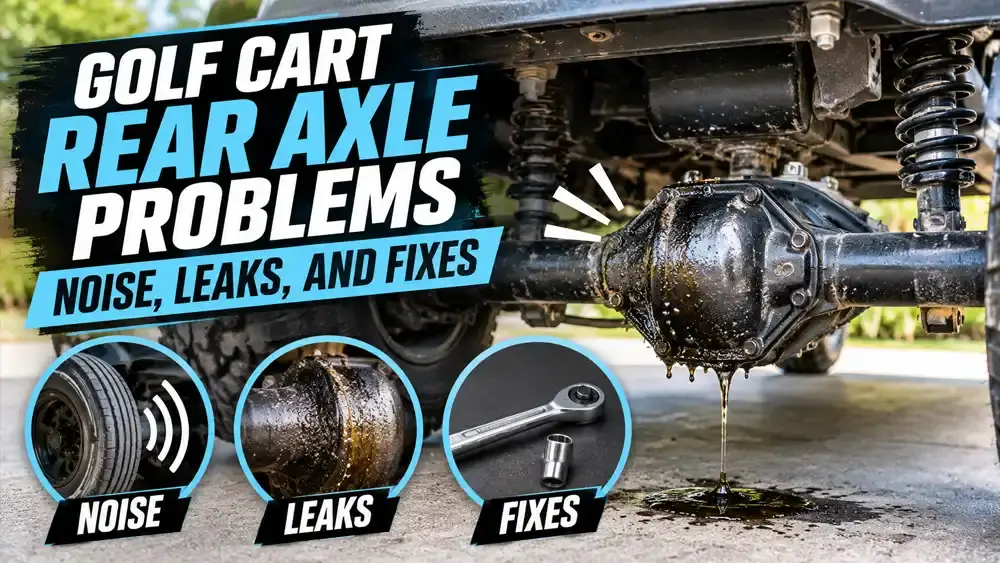
When the back of your cart starts to whine, grind, or drip, the rear axle is the place to look. In most cases, the cause is low or old gear oil, a leaking seal, or a worn bearing. These are far cheaper to fix when caught early.
This guide shows you how to tell where the noise comes from and what to check first. It also shows which fixes are DIY and which need a shop.
Catch an axle problem early and it is an oil change or a seal. Wait too long and it is a whole axle.
For a broader look at problems across the cart, see our golf cart troubleshooting hub.
What the Rear Axle and Differential Do
On most golf carts, the motor sends power to a rear axle assembly. Inside that housing are gears and a differential. The differential lets the left and right wheels spin at different speeds in a turn. Gear oil keeps all those parts cool and smooth.
- Electric carts: The motor drives the axle gears directly or through a gearbox.
- Gas carts: The engine drives a transaxle or axle through a clutch and drive system.
- Axle shafts and bearings: They carry each rear wheel.
- Seals: They keep oil in and dirt out where each shaft leaves the housing.
When oil leaks out, gears and bearings run dry. That is when noise starts, and damage follows fast.
Rear Axle Symptoms and What They Mean
| What you notice | Likely cause | Urgency |
|---|---|---|
| Whine that rises with speed | Low or old gear oil, worn gears, worn bearings, or the motor | Medium |
| Grinding or rumbling from center rear | Worn differential or axle bearings, low oil | High |
| Clunk when changing direction | Gear backlash, loose hub or key, worn differential parts | Medium to high |
| Clicking with each wheel turn | Damaged axle shaft, bearing, or wheel hub | High |
| Grinding in turns only | Worn differential gears or carrier bearings | High |
| Oil on a wheel or brake | Failed axle seal | High |
| Oil drips under the center | Cover gasket, plug, or pinion seal | Medium to high |
| One wheel spins, other does not | Broken axle shaft or spider gear damage | Stop |
| Wheel wobble or vibration | Bent axle, bad bearing, loose lug nuts | High |
Rear End Sound Decoder
Pick the sound or sign that matches. We will show the likely cause, the first check, and how urgent it is.
Safety First and Tools
- Park on level ground and chock the front wheels.
- Turn the key off and set tow or maintenance mode.
- Disconnect the main battery on electric carts. On gas carts, disconnect the spark plug wire.
- Raise the rear and support it on jack stands. Never rely on a jack alone.
- Wear gloves and eye protection. Gear oil is slippery and irritating.
- Floor jack and jack stands
- Socket set and torque wrench
- Drain pan and funnel
- Correct gear oil for your cart
- Clean rags and a flashlight
- Pry bar for rocking test
Step 1: Find Where the Sound Is Coming From
Not every rear-end noise comes from the axle. Rule out the easy things first.
- Tires: Cupped or uneven tires hum like a bad differential. Check wear and pressure. See how to fix a flat tire or book tire service.
- Brakes: A dragging or squealing brake can mimic axle noise. Review our guide to brake problems.
- Motor: On electric carts, a light motor whine is common. What matters is a new or louder whine, or one with vibration. See troubleshooting golf cart motor issues.
- Suspension: Worn bushings and loose spring bolts clunk over bumps. See suspension setup on our sister site.
A helpful trick is to note what changes the sound. If the pitch follows road speed, think axle, wheel, or tire. If it follows how hard you press the pedal, think motor or gears under load.
Step 2: Look for Leaks
- Clean the axle housing and the inside of each rear wheel.
- Drive a short distance, or run the cart briefly with the wheels off the ground.
- Look for fresh oil at the cover, the fill or level plug, the pinion seal, and each axle end.
Oil on the inside of a wheel or on the brake backing plate means an axle seal has failed. Oil can ruin brake shoes, so treat this as urgent.
Step 3: The Wheel Play Test
- Raise the rear and support it on jack stands.
- Grab a tire at 12 and 6 o’clock. Rock it in and out.
- Grab it at 3 and 9 o’clock. Rock it front to back.
- Spin the wheel by hand. Listen and feel for grinding or roughness.
Free play means a worn bearing, a loose hub, or a worn axle. A rough spin means a damaged bearing. Compare left to right. Both should feel the same.
Step 4: Check the Gear Oil
Low or old oil is the most common cause of axle noise, and it is the easiest fix. Many carts have never had this service.
- With the cart level, clean around the fill or level plug.
- Remove the plug. Oil should sit at the bottom edge of the hole or follow your manual’s level.
- Check the oil on a clean rag. Note the color and smell.
- If you drain it, check the drain plug and drained oil for metal.
| What you see | Meaning |
|---|---|
| Clean, amber oil at the right level | Healthy. Look for other noise sources. |
| Low level | A leak. Find it before topping off. |
| Dark, burnt-smelling oil | Old or overheated. Change it. |
| Milky oil | Water got in. Find the leak and change the oil. |
| Fine metal dust | Normal wear on some carts. Watch closely. |
| Chunks or glitter in the oil | Gear or bearing damage. Stop driving. |
Use the fluid your manual calls for. Many carts use gear oil such as 80W-90. Some final drives use an ATF-type fluid. Do not mix types or guess. Fill to the right level and tighten the plug to spec. Overtightening strips threads, and under-tightening leaks.
Many guides suggest checking the oil every six months and changing it about every two years, or yearly under heavy use. Your manual rules.
Step 5: Look at Mounts, Springs, and Couplings
Not all clunks come from inside the axle. Check these:
- Axle mounting bolts and U-bolts, for looseness.
- Leaf spring bolts and shackles, for wear.
- Shock mounts and bushings.
- Motor mounting bolts and, on some carts, the motor-to-axle connection.
- Wheel lug nuts, for proper torque.
Fixes by Problem
Low or old oil (easy)
Drain, refill with the correct fluid, and recheck for leaks. This fixes many whines.
Leaking cover or plug (easy to moderate)
Replace the gasket or plug and crush washer. Clean the surfaces first.
Leaking axle seal (moderate)
Replace the seal. If oil has reached the brakes, replace contaminated brake parts too. Do not reuse oily shoes.
Worn axle bearing (moderate to pro)
Bearings often need a press and the right tools. Many owners choose a shop for this job.
Worn differential or gears (pro)
Internal gear damage often means replacing the axle assembly. Do not keep driving. Metal in the oil means damage is already underway.
Broken axle shaft or locked differential (stop)
Do not drive. Tow or trailer the cart. See our guide on how to ship or transport a golf cart.
What Wears Out a Rear Axle Faster
- Lift kits and big tires: More leverage and load on gears and bearings. See our lift kit guide and mud tire guide.
- Speed and power upgrades: More torque stresses the gearset. Read about extreme golf cart modifications.
- Heavy loads and towing: Our sister site explains golf cart towing capacity.
- Skipped maintenance: Gear oil is easy to forget. Add it to your schedule with our maintenance tips.
- Water and dirt: Failed seals let contaminants in.
Repair or Replace the Axle?
A seal or a bearing is usually worth fixing. If the gears are damaged, a replacement axle may cost less than a rebuild, especially on an older cart. Weigh the repair against the cart’s value. If several parts are failing at once, a newer cart may make more sense. Browse new golf carts and used golf carts, or see our financing options.
DIY or Call a Pro?
- Checking oil level and condition
- Changing gear oil
- Replacing a plug or cover gasket
- Rocking tests and leak checks
- Grinding, lockup, or metal in the oil
- Oil on brakes
- Wheel play you cannot trace
- A leaking pinion or axle seal
- A whine that continues after an oil change
Our service department can diagnose the noise, change the oil, replace seals and bearings, and swap the axle. A tune-up is a smart time to have the gear oil checked.
How to Prevent Rear Axle Problems
- Check gear oil level twice a year.
- Change the oil on schedule.
- Look under the cart for drips each season.
- Keep lug nuts tight and tires evenly worn.
- Avoid overloading the cart.
- Fix small noises early. See our care guide.
Also hearing noise when steering? See golf cart steering problems.
Frequently Asked Questions
Why is my golf cart rear end making noise?
Common causes are low or old gear oil, worn differential or axle bearings, worn gears, or a failing wheel bearing. On electric carts, a motor whine can also sound like it comes from the rear. Check the oil level first, then rock the wheels to test for play.
What does a whining noise from a golf cart axle mean?
A whine that rises with speed often points to low or old gear oil, worn gears, or worn bearings. A light, steady motor whine is normal on many electric carts. A new, louder whine, or one with vibration, deserves a closer look.
Why is oil leaking from my golf cart rear axle?
Leaks usually come from an axle seal, a pinion seal, the cover gasket, or the fill or level plug. Oil on the inside of a wheel or on the brake backing plate usually means a failed axle seal.
What kind of oil does a golf cart rear axle use?
Many carts use gear oil such as 80W-90, but some final drives use an ATF-type fluid. The correct type and level depend on your make and model, so follow your service manual and do not mix fluids.
How often should I change golf cart rear axle oil?
Many guides suggest checking it every six months and changing it about every two years, or yearly under heavy use. Your manual gives the exact interval for your cart.
Is it safe to drive a golf cart with a grinding rear axle?
It is not safe to keep driving. Grinding, metal in the oil, or wheel play can lead to lockup or a broken axle. Stop driving and have the cart inspected.
Can a lift kit or big tires damage the rear axle?
They can add stress. Larger tires and added torque increase load on gears and bearings, so check the gear oil and bearings more often on a modified cart.
