
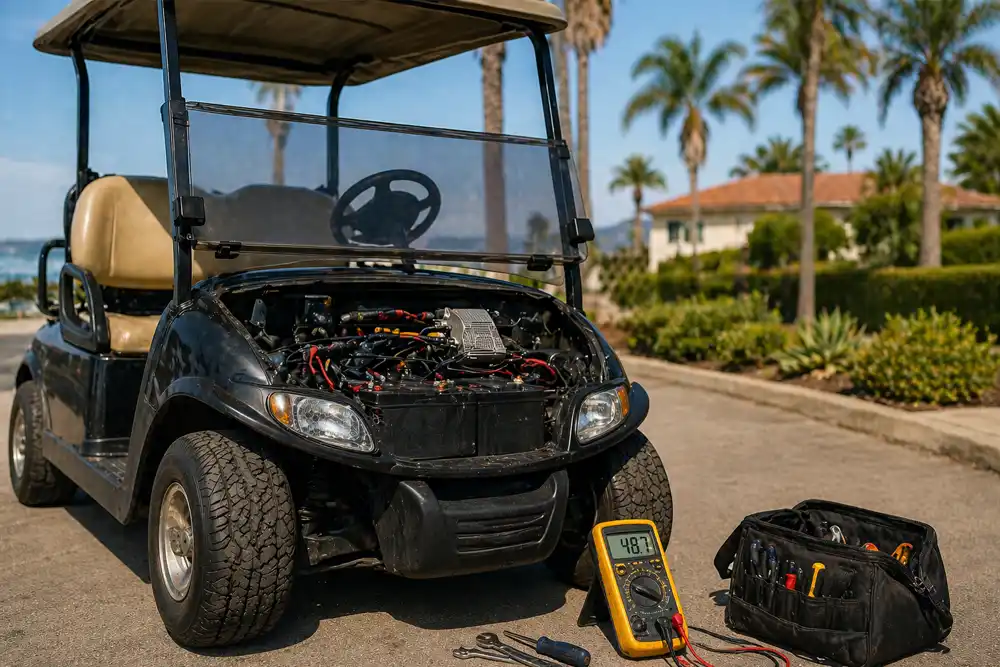
A golf cart that starts strong but quickly loses power can be frustrating and unpredictable. Whether you are cruising through a coastal neighborhood or using your cart for daily transportation in a California community, power loss usually signals an underlying issue that should not be ignored.
Many owners assume the problem is simply old batteries, but that is only one piece of the puzzle. Power loss can come from electrical resistance, worn components, environmental conditions, or charging habits. In California, factors like heat, elevation changes, and coastal air can accelerate these issues.
This guide breaks down the real causes behind golf cart power loss and explains how to fix them without wasting time or money on the wrong solution.
Golf Cart Losing Power Summary
Golf cart power loss is usually caused by battery degradation, poor electrical connections, or worn drivetrain components. In California, heat and coastal conditions can accelerate these problems. Start by checking battery health and connections, then evaluate the charger, motor, and controller. Fixing the root cause early prevents more expensive repairs and restores performance quickly.
Why Golf Carts Lose Power Over Time
Power loss does not usually happen all at once. It builds gradually as components wear down or become less efficient.
In California, frequent use combined with temperature extremes can speed up this process. Hills in certain regions also put additional strain on motors and batteries, revealing issues faster than in flat areas.
Understanding the root cause is key. Replacing the wrong component wastes money and does not fix the problem.
Battery Degradation and Voltage Drop
The most common cause of power loss is battery degradation. As batteries age, they lose their ability to hold voltage under load. This results in the cart slowing down, especially when climbing hills or carrying passengers.
Lead acid batteries are more prone to this issue. They gradually lose capacity and require more frequent replacement. Lithium batteries maintain consistent voltage longer but will still degrade over time.
In California heat, battery wear accelerates. High temperatures increase internal resistance and reduce overall lifespan.
If your cart feels strong at first but quickly fades, voltage drop under load is likely the issue.
Dirty or Corroded Connections
Electrical resistance is a major but often overlooked cause of power loss. Even if your batteries are in good condition, poor connections can restrict power flow.
Corrosion on terminals, loose cables, or worn connectors create resistance that limits how much power reaches the motor. In coastal California areas, salt air makes this problem more common.
Cleaning and tightening connections can restore performance almost immediately. It is one of the simplest fixes with the biggest impact.
Failing Motor or Worn Brushes
Electric motors rely on internal components that wear down over time. In many carts, motor brushes gradually wear out and reduce efficiency.
When this happens, you may notice sluggish acceleration or a lack of torque. The cart may struggle on inclines or feel weaker than usual.
Motor wear is more noticeable in areas with hills or heavy usage. If your cart has high mileage, the motor should be inspected.
Controller or Speed Sensor Issues
The controller regulates how power is delivered to the motor. If it begins to fail, it may limit output or deliver inconsistent power.
A faulty speed sensor can also send incorrect signals, causing the cart to reduce power unexpectedly.
These issues are more technical and often require diagnostic tools. However, they are a common cause when batteries and wiring appear to be in good condition.
Charger Problems Leading to Incomplete Charging
Sometimes the issue is not power loss during use but incomplete charging beforehand.
If your charger is not fully charging the batteries, the cart starts with less available energy. This creates the impression of power loss even though the batteries are simply undercharged.
California power fluctuations and heat can affect charger performance over time. Verifying that your charger is working correctly is an important step.
Tire Pressure and Mechanical Resistance
Not all power loss is electrical. Mechanical resistance can also reduce performance.
Low tire pressure increases rolling resistance and forces the motor to work harder. Misaligned wheels or worn bearings can have a similar effect.
These issues are easy to overlook but can significantly impact how your cart feels when driving.
Weight and Usage Habits
Carrying extra weight or frequently driving uphill increases demand on the system. Over time, this added strain can accelerate wear on batteries and electrical components.
In California communities where carts are used for transportation, it is common to see carts carrying multiple passengers or cargo. This can reveal underlying issues sooner.
How to Fix Golf Cart Power Loss
Fixing power loss starts with identifying the correct cause. A systematic approach saves time and prevents unnecessary replacements.
Begin with the batteries. Test voltage and check for signs of aging or imbalance. If the batteries are older, battery replacement service may be the most effective solution.
Next, inspect all electrical connections. Clean terminals, tighten cables, and look for corrosion or damage.
Verify that the charger is functioning properly and delivering a full charge.
If the issue persists, the motor and controller should be evaluated. These components require more advanced diagnostics but are critical to overall performance.
Finally, check mechanical factors such as tire pressure and alignment. Small adjustments can make a noticeable difference.
Preventing Future Power Loss
Regular maintenance is the best way to avoid power loss. Keeping batteries properly charged and maintained extends their lifespan and ensures consistent performance.
Store your cart in a cool, dry location whenever possible. This is especially important in California where heat can accelerate wear.
Clean connections periodically and monitor performance changes. Addressing small issues early prevents larger problems later.
When to Seek Professional Help
Some issues can be resolved quickly at home, but others require professional expertise.
If your cart continues to lose power after basic checks, or if you suspect controller or motor problems, professional diagnostics are recommended.
For California owners who rely on their carts daily, fast and accurate repair is essential to avoid downtime.
Golf Cart Losing Power Conclusion
Golf cart power loss is a common issue, but it is rarely random. Batteries, connections, and electrical components all play a role in delivering consistent performance.
In California, environmental factors like heat and coastal air add extra stress to these systems. By understanding the causes and addressing them early, you can restore your cart’s power and extend its lifespan.
The key is to diagnose the problem correctly and take action before it leads to more expensive repairs.
FAQs
Why does my golf cart lose power when going uphill?
This is usually caused by battery voltage drop under load or a weakening motor that cannot handle increased demand.
How do I know if my golf cart batteries are causing power loss?
Signs include reduced range slower acceleration and the cart losing strength quickly after a full charge.
Can bad connections cause a golf cart to lose power?
Yes loose or corroded connections can restrict electrical flow and reduce performance even if the batteries are good.
Why does my golf cart feel slow even with new batteries?
The issue may be with the motor controller or mechanical resistance such as low tire pressure or worn components.
Does heat affect golf cart performance?
Yes high temperatures common in California can reduce battery efficiency and accelerate wear.
How much does it cost to fix a golf cart losing power?
Costs vary depending on the issue. Battery replacement may range from one thousand to five thousand dollars while smaller fixes like cleaning connections are minimal.
Can a bad charger cause power loss?
Yes if the charger is not fully charging the batteries the cart will start with less available power and feel weak.
When should I have my golf cart professionally inspected?
If basic troubleshooting does not resolve the issue or if performance continues to decline it is best to have a professional diagnose the problem.