
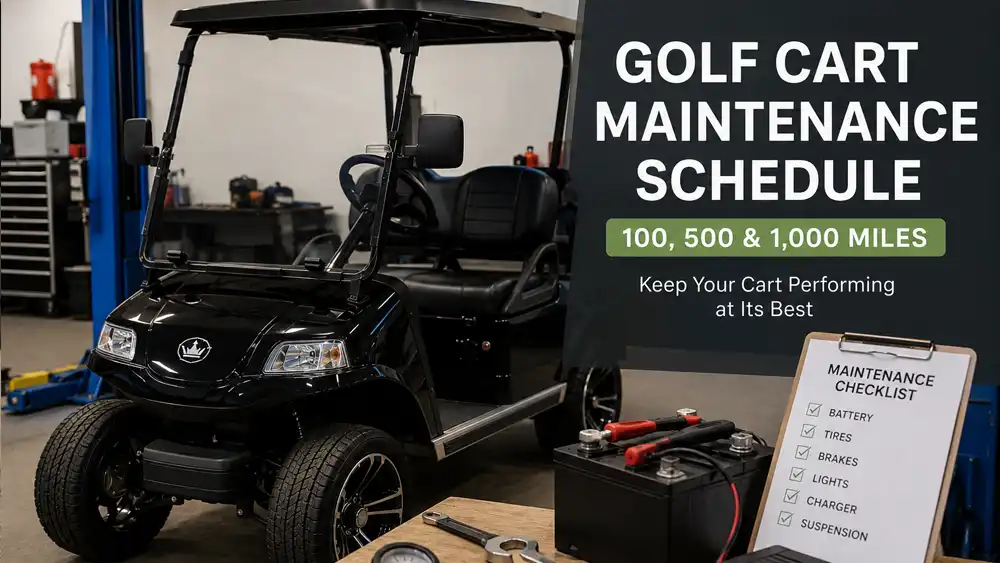
Summary: A golf cart maintenance schedule should include inspections every 100 miles, preventative maintenance around 500 miles, and a comprehensive service check at 1,000 miles. Important tasks include monitoring battery health, checking tire pressure and tread wear, inspecting brakes, testing the charging system, tightening electrical connections, and preparing the cart properly for seasonal storage. Following a mileage based maintenance schedule helps improve reliability, maximize battery life, and reduce long term ownership costs.
Golf carts have become much more than vehicles for the golf course. Today they are used in neighborhoods, campgrounds, resorts, large properties, and communities throughout California. Whether you own a lithium powered street legal golf cart or a traditional electric model, following a consistent maintenance schedule can help protect your investment and keep your cart performing its best.
Many owners wait until something breaks before scheduling service. Unfortunately, that approach often leads to expensive repairs that could have been avoided with simple preventative maintenance.
This guide outlines what should be inspected at 100, 500, and 1,000 miles to help keep your golf cart running smoothly year after year.
Why a Golf Cart Maintenance Schedule Matters
Unlike a traditional vehicle, golf carts often operate in environments that create unique wear and tear. Coastal moisture, dusty roads, uneven terrain, and frequent stop and go driving can all affect long term performance.
Routine maintenance helps:
- Extend battery life
- Improve ride quality
- Reduce repair costs
- Increase reliability
- Improve safety
- Protect resale value
A mileage based maintenance schedule also makes it easier to identify small issues before they become major problems.
What to Check Every 100 Miles
The first 100 miles are primarily about monitoring the condition of key components and identifying any developing issues.
Inspect Tire Pressure and Tread
Tires play a major role in ride comfort and handling. Low tire pressure can reduce efficiency and accelerate uneven wear.
Check:
- Tire pressure
- Sidewall condition
- Tread wear
- Lug nut tightness
If your cart regularly travels on paved roads or neighborhood streets, tires should be inspected frequently.
Check Battery Performance
Battery health directly impacts driving range and performance.
Inspect:
- State of charge
- Charging behavior
- Battery connections
- Signs of corrosion
Owners of lithium powered golf carts should verify that the charging system is operating properly and monitor any unusual changes in range.
Test Lights and Safety Equipment
Street legal golf carts should have all required safety equipment functioning properly.
Inspect:
- Headlights
- Tail lights
- Turn signals
- Brake lights
- Horn
- Mirrors
Small electrical issues are often easier and less expensive to address early.
Listen for Unusual Sounds
Pay attention to:
- Suspension noises
- Brake squeaks
- Steering vibration
- Clicking sounds during acceleration
These symptoms can indicate developing mechanical issues that should be inspected by a qualified technician.
What to Service at 500 Miles
At approximately 500 miles, a more thorough inspection is recommended.
Inspect the Brake System
Brakes are one of the most important safety systems on any golf cart.
A technician should inspect:
- Brake pads
- Brake adjustment
- Brake cables
- Brake response
If stopping distance has increased or braking feels inconsistent, service should be scheduled immediately.
Inspect Steering Components
Steering components naturally experience wear over time.
A 500 mile inspection should include:
- Steering linkage
- Tie rods
- Bushings
- Front suspension components
Addressing minor steering issues early can prevent larger repair costs later.
Check Electrical Connections
Electrical systems are exposed to vibration, moisture, and environmental conditions.
Inspect:
- Wiring harnesses
- Connectors
- Battery terminals
- Controller connections
Loose or damaged electrical connections can create intermittent performance issues that are difficult to diagnose later.
Schedule a Professional Inspection
Even if your cart appears to be operating normally, a professional inspection can help identify potential problems before they become major repairs.
If your cart is due for service, visit our Golf Cart Maintenance Inquiry Page to schedule an inspection with our service team.
What to Inspect at 1,000 Miles
Reaching 1,000 miles is an excellent time for a comprehensive maintenance evaluation.
Perform a Full Battery System Assessment
The battery system should be thoroughly inspected for:
- Charging efficiency
- Voltage consistency
- Connection integrity
- Overall battery health
Battery performance directly affects range, acceleration, and long term ownership costs.
Inspect Suspension Components
Suspension wear can gradually affect ride comfort and handling.
Components to inspect include:
- Shock absorbers
- Bushings
- Springs
- Suspension mounting points
Check Charger Performance
Many charging issues develop slowly over time.
Inspect:
- Charger output
- Charging cables
- Charging port condition
- Battery charging cycles
Proper charging practices are essential for maximizing battery lifespan.
Evaluate Overall Vehicle Condition
A comprehensive inspection should include:
- Frame condition
- Fasteners
- Electrical systems
- Drive components
- Safety equipment
This is also a good time to determine whether upgrades or replacement components may improve performance.
Seasonal Storage Tips
Many owners store their golf carts for extended periods during certain times of the year.
Before storage:
Fully Charge the Battery
Always store the cart with an appropriate battery charge level.
Clean the Cart Thoroughly
Remove:
- Dirt
- Salt residue
- Debris
- Moisture
Cleaning helps prevent corrosion and cosmetic damage.
Protect Tires
Proper tire inflation helps prevent flat spotting during long periods of inactivity.
Store Indoors When Possible
Covered storage helps protect the vehicle from:
- Sun exposure
- Rain
- Coastal moisture
- Temperature fluctuations
Signs Your Golf Cart Needs Service
Regardless of mileage, schedule an inspection if you notice:
- Reduced driving range
- Slower acceleration
- Unusual noises
- Brake performance issues
- Steering problems
- Charging difficulties
- Electrical malfunctions
Addressing these symptoms early often prevents more expensive repairs later.
Final Thoughts
Following a golf cart maintenance schedule is one of the best ways to protect your investment and maximize long term performance. By performing regular inspections at 100, 500, and 1,000 miles, owners can identify small issues early, improve reliability, and extend the life of critical components.
If your golf cart is due for service, maintenance, or a professional inspection, contact Central Coast Carts to schedule an appointment with our experienced service department.
FAQs
How often should a golf cart be serviced?
Most golf carts benefit from basic inspections every 100 miles and more comprehensive service evaluations around 500 and 1,000 miles.
What maintenance should be performed on golf cart batteries?
Battery maintenance includes monitoring charge levels, inspecting connections, checking for corrosion, and ensuring the charging system is functioning properly.
How often should golf cart tires be checked?
Tire pressure and tread condition should be inspected regularly, especially if the cart is frequently driven on paved roads or neighborhood streets.
Why is preventative golf cart maintenance important?
Preventative maintenance helps reduce repair costs, improve reliability, extend battery life, and keep the cart operating safely.
What should be inspected before storing a golf cart?
Owners should inspect the batteries, tires, brakes, electrical system, and charging equipment before placing a cart into long term storage.
When should I schedule professional golf cart service?
Professional service is recommended whenever you notice performance issues, unusual noises, reduced driving range, steering concerns, or brake problems.