Street Legal Golf Carts in California
The 2026 LSV Guide
Thinking about driving your golf cart on the street? First, you need to know if it qualifies. California has clear rules for street legal golf carts. This guide breaks them down in plain English.
We’ve sold and delivered street legal golf carts across the Central Coast for years. So this isn’t theory. It’s what we see every day at the DMV counter and on the road.
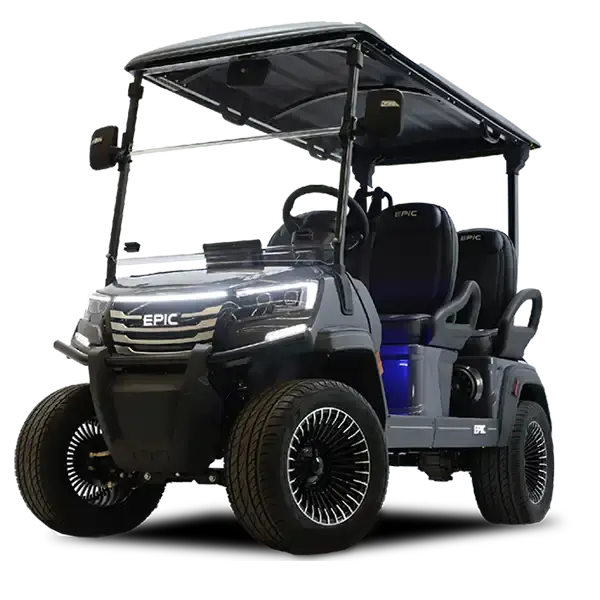
Our Street Legal Golf Cart Brands






Golf Cart vs. LSV: What’s the Difference?
A golf cart and a street legal golf cart are not the same thing. Here’s the difference:
- Basic golf carts top out at 15 mph. It can only drive in a few places, like private roads or designated golf cart communities.
- Low Speed Vehicles (LSVs) are the street legal version. It goes 20–25 mph. It can drive on any public road posted at 35 mph or under.
If you want real street access, (not just a golf course) you need an LSV. For a full breakdown of what qualifies as an LSV under California and federal law, see our guide: What Is an LSV? Low-Speed Vehicle Laws, Requirements & California Guide.
LSV Registration: Step by Step
Registering your LSV works a lot like registering a car:
- Gather your paperwork. You’ll need the Manufacturer’s Certificate of Origin (or title), a completed REG 343 form, and proof of insurance.
- Confirm your equipment. All eight safety items above need to be installed and working.
- Submit your application. If you bought from a California dealer, they usually handle this for you.
- Pay your fees. LSVs register like passenger vehicles, so expect similar annual costs.
- Get your plate. Mount it on the rear of the cart. You’re now road-ready.
For the full legal detail behind every step — plus how California’s rules apply to gated communities like Canyon Lake — see our pillar guide: Golf Cart Laws in California (2026): LSV Registration, DMV Rules & Canyon Lake Guide.
What Makes a Golf Cart Street Legal?
Under federal safety rules (FMVSS 500), every street legal LSV in California must have:
- Headlights and taillights
- Turn signals
- Brake lights
- A windshield
- Seat belts
- Mirrors
- A parking brake
- A factory-assigned 17-digit VIN
That last item matters most. You can’t bolt these parts onto a regular cart and call it street legal. The cart must be built as an LSV at the factory. Otherwise, the DMV won’t register it — no matter how many lights you add.
That’s why buying from a licensed dealer saves you headaches. A new LSV already comes fully equipped, VIN included.
Thinking about converting an older cart instead? Read the real numbers first: Cost to Make a Golf Cart Street Legal (Full Breakdown in California).
Insurance: What California Requires for LSVs
As of 2025, California law (SB 1107) sets minimum liability coverage for LSVs at:
People often call this 30/60/15 coverage. Most specialty insurers who cover motorcycles also cover LSVs. Rates usually run $150 to $300 a year — well below a full auto policy.
One important note: your homeowner’s insurance usually won’t cover your cart on public roads. Don’t assume you’re covered. Check first.
Where You Can (and Can’t) Drive
This is the part most people get wrong. Here’s the simple version:
| Standard Golf Cart | Registered LSV | |
|---|---|---|
| Public roads | 25 mph zones only, if local rules allow | Any road up to 35 mph |
| Private community | Yes | Yes |
| Registration | Not required | Required |
| License needed | Yes, on public roads | Yes, always |
| Insurance | Not required by state | Required (30/60/15 minimum) |
| Seat belts | Not required | Required |
| Max legal speed | 15 mph | 25 mph |
Standard Golf Cart
Registered LSV
LSVs can cross a busier road at a signalized intersection, as long as both ends of the crossing sit on a 35 mph (or slower) road. They still can’t use freeways or highways.
A common question we get: can you drive a cart along the coast? See our specific answer here: Can You Drive a Golf Cart on Cabrillo Highway in California?
Ready to Buy a Street Legal Golf Cart for Sale in California?
Central Coast Carts delivers free within 200 miles of Grover Beach — covering Monterey, Santa Barbara, San Luis Obispo, Ventura, Kern, Fresno, and LA counties. Every cart we sell arrives fully equipped and ready to register.
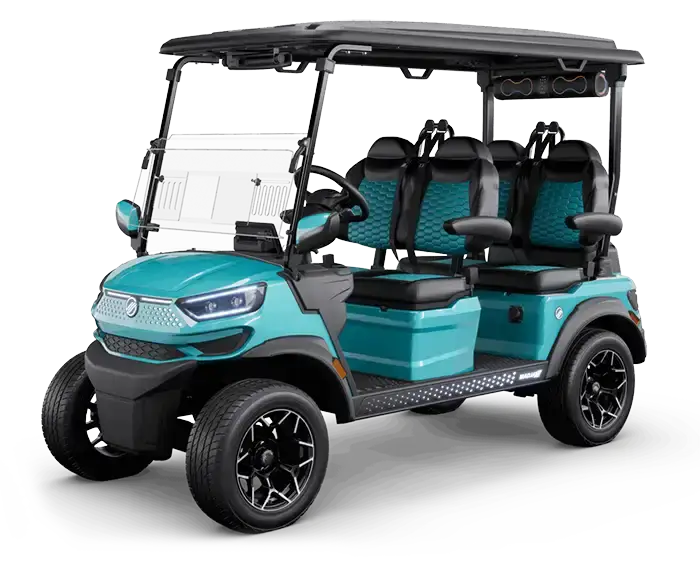
Where Californians Are Already Driving Carts
Some communities have fully embraced cart culture. On the Central Coast alone, that includes Pismo Beach, Carmel Valley, and towns up and down Highway 1. Beyond our area, Carmel-by-the-Sea, Catalina Island, and the Coachella Valley are well known for it too.
Local rules vary by city. Some communities allow standard golf carts on designated routes even without full LSV registration. Check with your city or HOA for approved cart routes before you head out. Our Golf Cart Laws in California guide covers how these local exceptions work, including in gated communities like Canyon Lake.
Buy New, or Convert an Old Cart?
You have two options: buy a factory-built LSV, or try to convert a basic cart. We recommend the first option, and here’s why.
A converted cart runs into a wall fast. Without a factory VIN and FMVSS 500 certification, the DMV won’t register it as an LSV. Period. You’d have to go through a much more complex process as a “specially constructed vehicle” — that means a CHP inspection and a new VIN assignment. It’s slow, and it’s not guaranteed to work.
See the exact cost comparison in our dedicated guide: Cost to Make a Golf Cart Street Legal (Full Breakdown in California). Buying new skips the guesswork. Your cart arrives already compliant, already titled, and ready to register.
What Happens If You Skip These Steps?
Driving a non-compliant cart on public roads carries real risk:
Fines up to $250 for equipment violations
Possible impound if the cart isn’t authorized for that road
No insurance protection if you’re in an accident — your homeowner’s policy almost certainly won’t step in
None of this is complicated to avoid. Buy the right cart, register it, insure it. That’s the whole checklist.
California Street Legal Golf Cart FAQs
Do I need a driver’s license to drive a street legal golf cart in California?
Yes. You need a valid license to drive an LSV on public roads, every time.
Can I drive my LSV on a 40 mph road?
No. LSVs are limited to roads posted at 35 mph or less. You can only cross a faster road at a signalized intersection.
What’s the difference between an NEV and an LSV?
They’re essentially the same category under federal law. Most sellers use the terms interchangeably. Full detail here: What Is an LSV?
Does my HOA need to approve cart use on community roads?
Usually, yes. Check with your HOA or city public works department for approved routes.
How much does insurance cost for a street legal cart?
Expect $150 to $300 a year for a standard liability policy — well under typical car insurance rates.
Do I need a child seat for kids riding in a golf cart in California?
It depends on the cart type and seating setup. See our specific answer: Do You Need a Child Seat in a Golf Cart in California?
How much does it cost to make a golf cart street legal?
Costs vary widely depending on whether you convert an existing cart or buy factory-built. Full number breakdown here: Cost to Make a Golf Cart Street Legal

Hours
Monday: 9am – 4pm
Tuesday: 9am – 4pm
Wednesday: 9am – 4pm
Thursday: 9am – 4pm
Friday: 9am – 4pm
Saturday: 9am – 2pm
Sunday: Appointment Only
Contact
805-225-5228
centralcoastcarts@gmail.com
231 Beckett Pl #A/B Grover Beach, CA 93433